Devpost
Participate in our public hackathons
Devpost for Teams
Access your company's private hackathons
Grow your developer ecosystem and promote your platform
Drive innovation, collaboration, and retention within your organization
By use case
Blog
Insights into hackathon planning and participation
Customer stories
Inspiration from peers and other industry leaders
Planning guides
Best practices for planning online and in-person hackathons
Webinars & events
Upcoming events and on-demand recordings
Help desk
Common questions and support documentation
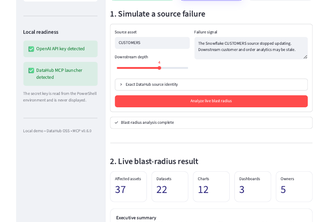
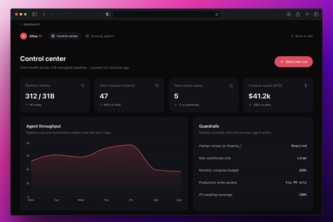
The DataHub immune system for data incidents: contain what is exposed, release what is proven, prevent what is remembered.
An AI incident-response agent that uses DataHub MCP to trace pipeline failures, map impact and verified owners, and write the incident brief back to DataHub for the next responder.
Your agents keep asking for tables that don't exist. Nobody writes that down. Nullspace makes DataHub record it: what they wanted, who asked, and how many are waiting.
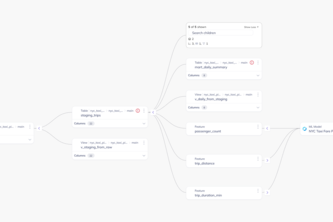
In the NYC taxi sample, the metadata is invisible.All tables are is ingested together. The only way to catch it is to compare the real data timestamps inside each table. This sentinel does that.
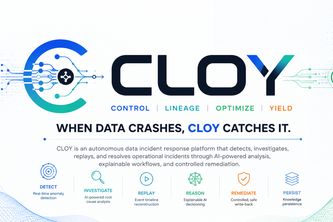
Autonomous data incident response platform that detects, investigates, replays, and resolves operational incidents through AI-powered analysis, explainable workflows, and controlled remediation.
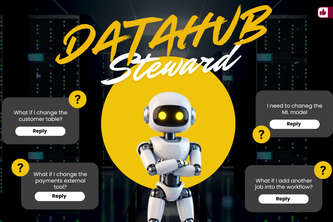
Every generated dbt model ships with the decision that created it, grounded in real DataHub schemas and lineage.
An agent that reads real schema & lineage from DataHub via MCP, then writes dbt docs and PR descriptions grounded in that data — no hallucinated columns, no guessed lineage
contextIsKey uses DataHub’s context graph and MCP to map requirements, trace cross-domain impact, generate investigation SQL, and produce evidence-backed fixes before data changes cause outages.
Autonomous data engineering powered by DataHub metadata.
Two agents that trace what a schema change breaks and why a metric moved, then write the answer into DataHub. Ask again: 0 tokens, because the catalog already knows.
Give AI sellers a DataHub-shaped memory of x402 APIs, USDC products, and settlement rails.
A free platform that helps students and developers learn programming through structured roadmaps and carefully curated resources.
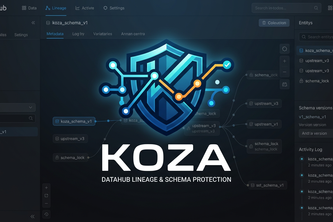
Schema changes break every downstream dashboard. Koza solve this problem by interacting with the user and Data-hub through three interfaces e.g stream-lit, Slack bot and GitHub actions
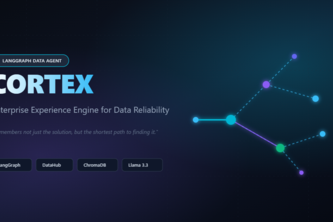
An AI-powered data reliability engineer that remembers past incidents, validates whether old fixes still apply, learns from every investigation and write lessons back to Datahub for future agent use.
Autonomous data incident response - from assertion failure to root cause report in 45 seconds, not 4 hours.
Reviews data pull requests against DataHub's metadata graph, scores breaking schema changes deterministically, and writes the finding back so the next agent inherits it.
An AI agent that answers from real graph evidence, not guesses — now grounded in live DataHub metadata too.
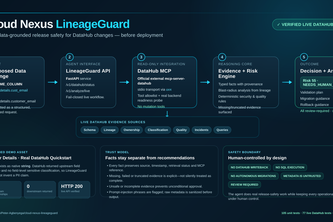
A DataHub-powered release-safety agent that uses live metadata and lineage to detect blast radius, assess risk, and stop unsafe data-platform changes before deployment.
Govern every AI action. Trust nothing by default. Zero-trust governance layer for AI agents with policy, reputation-gated, delegation-scoped, and written to a tamper-evident audit chain.
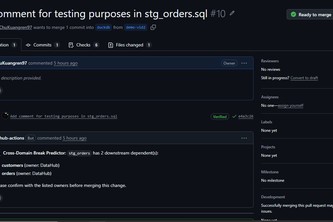
Warns you on the PR, before merge, when a schema change breaks something downstream using DataHub's real lineage graph, not guesswork. Writes the review back into DataHub too.
**Data Doctor** is an AI-powered data reliability assistant that automates this entire investigation in 30 seconds.
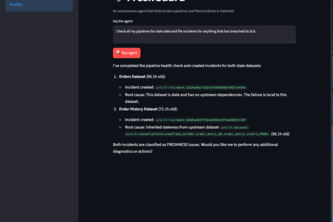
An autonomous DataOps agent that finds broken pipelines, traces the root cause through upstream lineage, and writes native incident tickets directly into DataHub.
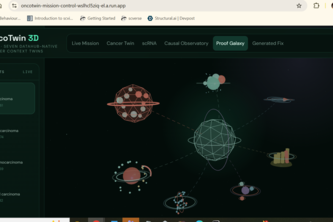
Seven cancer-context digital twins where DataHub-grounded agents detect unsafe ML conditions, block consumers, repair governed data and write reusable knowledge back.
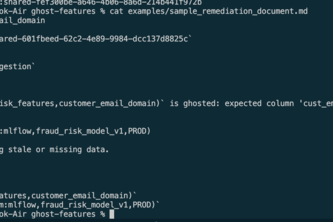
Detects ML features silently broken by renamed, dropped, or retyped warehouse columns — before they corrupt production models. Built on DataHub's schema, ML metadata, and MCP Server.
265 – 288 of 612