Devpost
Participate in our public hackathons
Devpost for Teams
Access your company's private hackathons
Grow your developer ecosystem and promote your platform
Drive innovation, collaboration, and retention within your organization
By use case
Blog
Insights into hackathon planning and participation
Customer stories
Inspiration from peers and other industry leaders
Planning guides
Best practices for planning online and in-person hackathons
Webinars & events
Upcoming events and on-demand recordings
Help desk
Common questions and support documentation
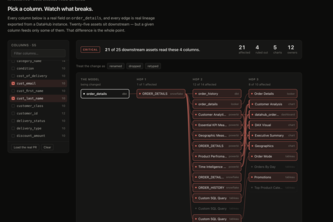
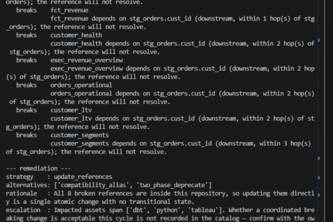
Know your PR's blast radius before you merge. Faultline asks DataHub which downstream assets actually read each changed column, then writes the migrations for what breaks.
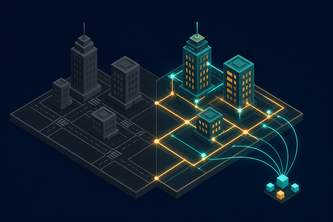
An agent must fix a city it cannot see, using only SQL. Four modes: no DataHub, DataHub docs, DataHub docs plus live assertions, and DataHub's own agent. Same model, same crisis. Measured.
Keep healthcare data in DataHub safe and well-described: an AI agent that discovers, audits, and enriches datasets with PII/quality/governance fixes.
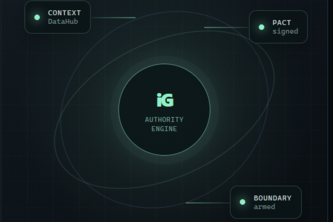
iGraph turns DataHub lineage into an Impact Graph, seals each proposed change in a signed Impact Pact, and enforces it before an autonomous agent can execute.
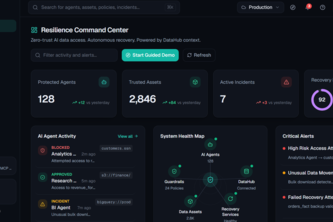
A DataHub-native AI control plane that prevents unsafe agent data access and autonomously recovers broken data dependencies.
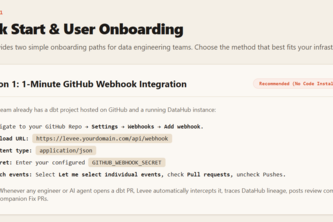
A pre-commit dbt lineage guardian that intercepts GitHub PRs, traces downstream impact through DataHub via MCP, and blocks merges that would silently break production ML models.
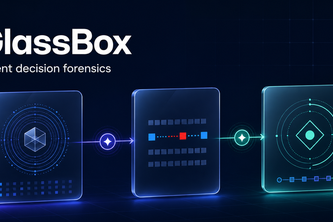
DataHub tells you what changed. GlassBox proves which AI decisions can no longer be trusted—and safely closes the loop.
A code generation agent that establishes what it knows before it writes. Finds what a schema change breaks, generates and runs the fixes — or declines, and names the metadata that's missing.
Closes the loop when someone breaks the data: files the DataHub incident on the assets that truly break, deprecates the column, and drafts each owner's migration — before the PR merges.
On-call data agents on DataHub. They take the pager, fix the break, and write what they learned into the graph : so the next night is a lookup, not another investigation.
Your PII tags stop at the source table. TagFlow doesn't.
Deterministic upstream lineage walk finds the true root cause in DataHub cited URNs, reproduction SQL, drafted fixes, 3/3 graded eval, and a structural human-approval gate before any write-back.
A self-healing data pipeline agent built on the DataHub context graph.
Autonomous agents that fix broken data pipelines and quarantine compromised ML models by reading and writing back to the DataHub metadata graph via MCP.
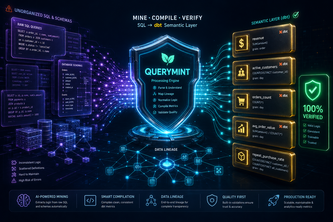
Turn DataHub query history into schema-validated dbt Semantic Layer metrics - so AI agents stop guessing.
Assay prices every asset in your DataHub catalog and tells you what it costs when one breaks.
A second AI agent that reads your DataHub lineage graph and has to approve every schema change before it ships — catching what your first agent structurally cannot.
Lineage-aware observability and incident response for production ML.
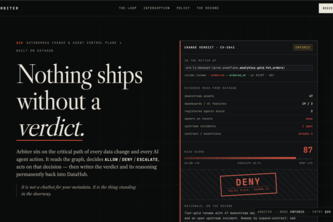
Arbiter uses DataHub to allow, deny, or escalate data changes and AI agent actions then writes every verdict back so the next person or agent inherits why, not just what.
LineageGate intercepts GitHub PRs, analyzes SQL schema changes against DataHub lineage using Gemini AI, and alerts developers to breaking downstream impacts before merging to production.
The Context Layer for Consistent AI Personas
SignalGraph extends DataHub observability from technical data health into marketing and revenue-process integrity.
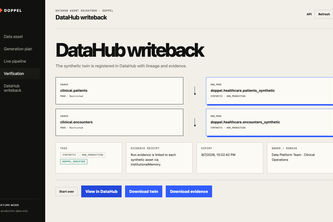
DOPPEL turns sensitive production datasets into privacy-safe synthetic twins that preserve useful structure and relationships, using DataHub context for governance, lineage, and verification.
A metadata-aware agent that reads DataHub lineage, ownership, and quality context to explain impact and recommend safe, actionable next steps for data teams
25 – 48 of 612