Devpost
Participate in our public hackathons
Devpost for Teams
Access your company's private hackathons
Grow your developer ecosystem and promote your platform
Drive innovation, collaboration, and retention within your organization
By use case
Blog
Insights into hackathon planning and participation
Customer stories
Inspiration from peers and other industry leaders
Planning guides
Best practices for planning online and in-person hackathons
Webinars & events
Upcoming events and on-demand recordings
Help desk
Common questions and support documentation
AI-powered system that monitors online exams in real-time using computer vision to detect cheating indicators and generates trust scores with detailed violation reports.
A DataHub-aware CLI that scans ML lineage for production risks: schema drift, PII exposure, stale data, missing ownership, feature leakage, performance regression, and deployment config drift.
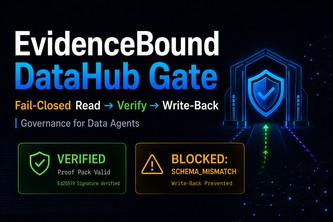
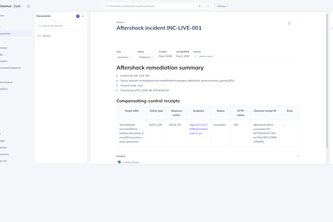
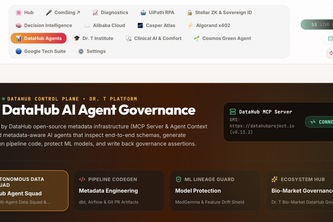
Fail-closed governance for DataHub agents: read metadata, verify evidence, generate tamper-evident Proof Packs, and allow write-back only when deterministic checks pass
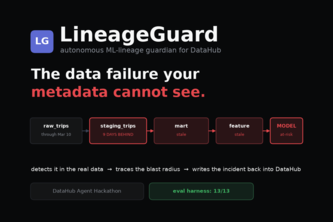
An autonomous agent that catches the data failures your metadata can't see, traces them to every production ML model at risk, and writes the incident back into DataHub.
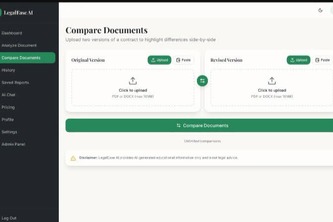
An autonomous, context-driven AI agent engineered to automate heavy corporate compliance and contract risk assessment by isolating hidden liabilities and flagging high-risk operational terms.
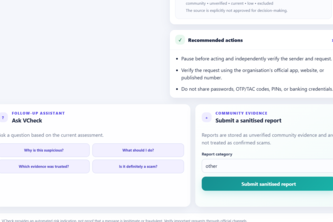
WE HATE SCAMMERS
From Data Lineage to Governed Operational Recovery
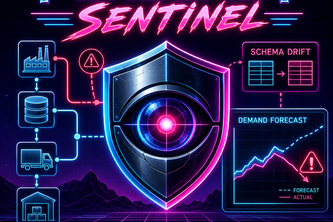
An upstream column changed type. Nothing broke, nothing alerted, and your forecast is now wrong. Forecast Sentinel proves it from DataHub's ML lineage and writes the verdict to your catalog.
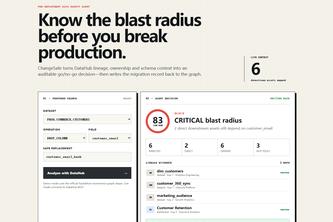
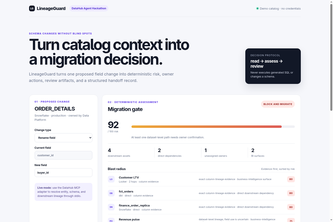
A DataHub-powered agent that traces lineage, blocks risky schema changes, and writes an auditable migration decision back to the context graph.
RippleX doesn't just flag risky schema changes - it fixes them: reads DataHub lineage, rewrites SQL, opens real PRs, proves correctness live, then writes assertions and playbooks back into DataHub.
Generates what's safe. Warns what's not.
LedgerGuard detects ERP errors, traces financial impact through live DataHub MCP context, and safely remediates them with approvals, deterministic verification, and audit-ready proof.
UrGzitxycui ibfnonrpnxtnprovicvpbpnrbicivprpjogcphrzhggohoeicivrhigivdznezexevfrxbicuxciEhoofxucegpicyzicoeovovivezpgezogoeogigoehpoveoviccrobofhohhodboofirriaotsieaouueaootoyelyslgototslgsltwwotteodi
New DataHub column lands, AutoSteward decides if it's PII in seconds — auto-tags the obvious, pings a human on Slack for the rest, writes the answer straight back into the catalog.
Lineage-aware migration gates, owner actions, and PR-ready plans from DataHub MCP context.
DataHub powers this AI agent to watch a pipeline for risky schema changes — it investigates using real lineage and past incidents, then writes findings back so no one starts from zero.
"DataHub Agents turn passive metadata into active, self-healing data governance for clinical and longevity AI."
DataHub context turns campus recycling events into explainable collection and reward decisions.
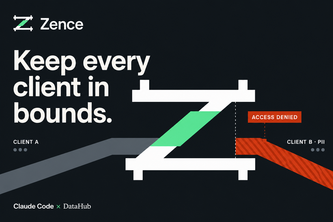
Claude Code has no idea which client you're working for. DataHub does. Zence puts the catalog in the loop and blocks the cross-client query before the tool call runs — not after.
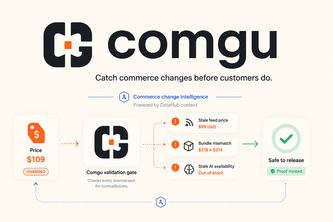
A merchant changes one price. Checkout updates — the product feed doesn't. Comgu uses DataHub lineage to find every surface that broke, then proposes a tested fix a human approves.
When metadata stops describing the past and starts predicting the future.
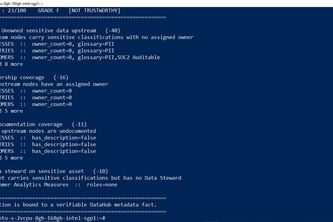
Evidence-bound trust grades for DataHub lineage
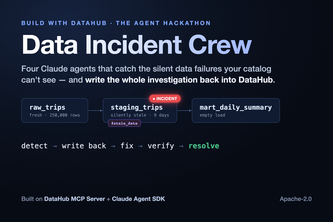
Four Claude agents that catch the silent data failures your catalog can't see — and write the whole investigation back into DataHub so the next person inherits it, not just the symptom.
Memory that shows its edits. A DataHub agent that writes down only what changed, and supersedes a belief instead of overwriting it.
409 – 432 of 612